
Contents
Choosing the right knife is a blend of technique and sensibility: a practical decision that affects your safety, efficiency, and enjoyment in the kitchen, hunting, or in craft work. Did you know that professionals spend years selecting and refining their tools? This guide brings together practical tips, technical criteria, and real examples so you can learn to choose knives wisely, protect your investment, and get more out of each blade.
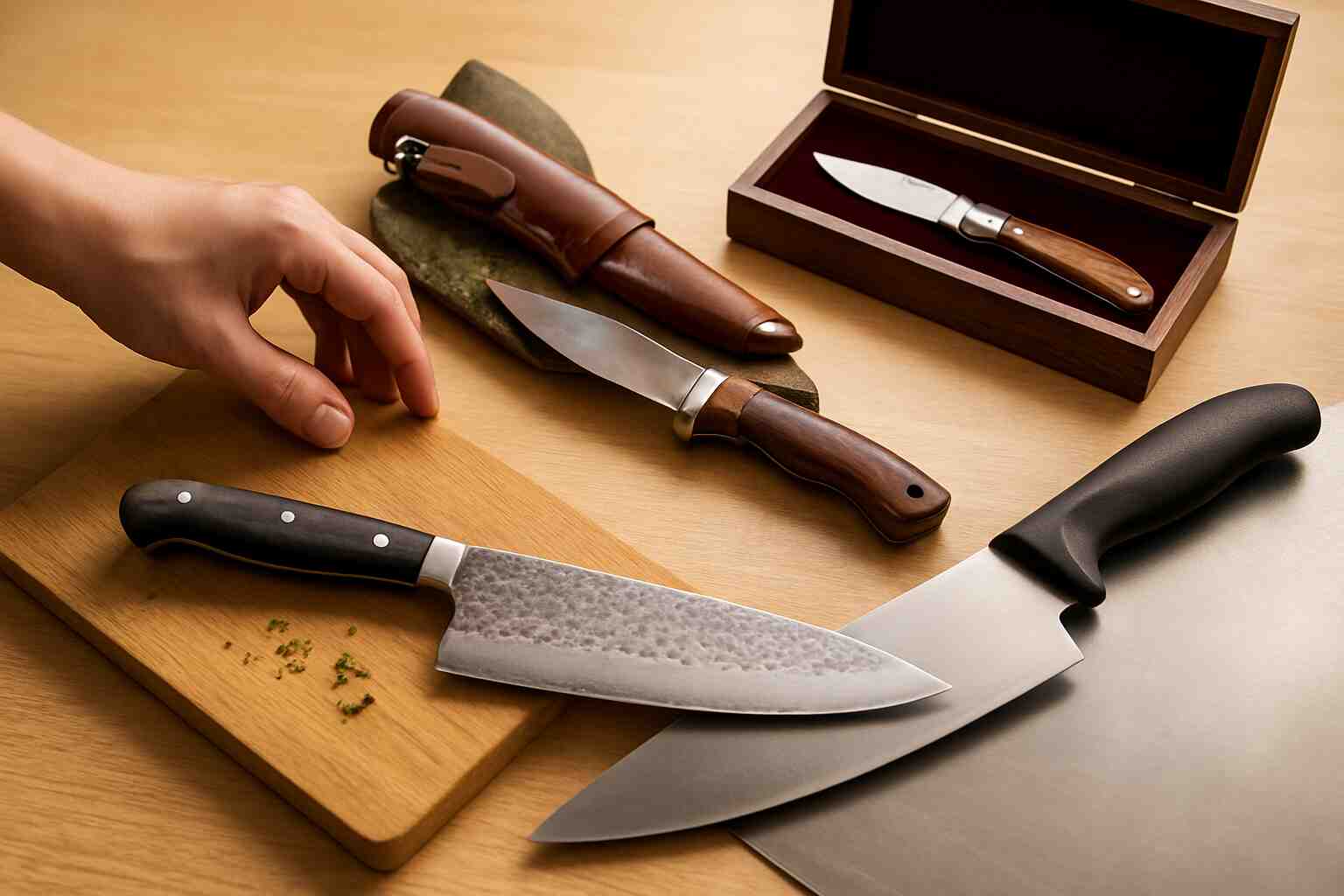
What makes a knife truly good
The quality of a knife is not a single attribute: it is valued by a set of characteristics that must be in balance. Among the most important are the edge, the firmness of the blade, the handling and design of the handle, the materials used, the heat treatment, and durability. Balance, weight, and ergonomics also influence. An excellent knife cuts well, maintains its edge easily, and is safe for daily use.

Three qualities you cannot ignore
- Cutting ability: how the blade cuts from the first use and how it performs when cutting different materials.
- Ease of sharpening: some alloys are easier to revive than others; this is crucial if you use the knife daily.
- Corrosion resistance: a steel that rusts quickly requires constant maintenance; stainlessness helps in culinary use and in humid environments.

Types of knives according to their use
There is no single perfect knife. What does exist is an ideal knife for each task. Below we present the main groups and their utility:
- Kitchen knives: designed for filleting, chopping, dicing, and precise tasks. They include chef’s, Santoku, paring, and bread knives.
- Hunting and outdoor knives: resistant, with good non-slip handles and blades designed for skinning, cutting, and field work.
- Folding and pocket knives: portable, practical for everyday use, camping, and survival.
- Handcrafted and collector’s knives: pieces that combine aesthetics, special materials, and traditional forging techniques.
- Professional knives: designed for chefs, divers, military personnel, or artisans; optimized for their work environment.
Practical examples
If you cook daily, opt for a good chef’s blade in high-quality steel and a paring knife for details. If you go to the mountains frequently, look for a skinning knife or a fixed-blade knife with a robust sheath.

Blade materials and treatments
The material conditions the behavior: ease of sharpening, edge retention, fragility, and corrosion resistance. Below we review the most relevant families and their pros and cons.
Carbon steel
Advantages: excellent retention and ease of sharpening; ideal for intensive work knives. Disadvantages: corrosion if not properly cared for; requires maintenance and cleaning after use with acidic foods or in humid environments.
Stainless steel and modern stainless steels
Advantages: greater corrosion resistance; less maintenance. Disadvantages: some stainless steels are more difficult to sharpen or do not achieve the same edge retention as high-quality carbon steels.
Damascus steel

Damascus knives combine layers of steel that create an aesthetic pattern and improve mechanical properties. Many modern Damascus blades are made from steels like VG-10 or combinations that seek hardness and toughness. They are an excellent option for both collection and demanding use, if a quality forge and heat treatment are selected.
Ceramic

Ceramic blades offer extraordinary sharpness and maintain their edge for a long time. They are made from zirconium oxide and silica that are vitrified at extreme temperatures. They are fragile to impacts and do not tolerate use for prying or twisting; they do not replace a metal knife for demanding tasks.
Quick material comparison
| Material | Edge retention | Ease of sharpening | Corrosion resistance | Recommended use |
|---|---|---|---|---|
| Carbon steel | High | Easy | Low (requires care) | Professional kitchen, field work |
| Stainless steel | Medium | Variable | High | Home kitchen, humid environments |
| Damascus (layers) | High | Medium | Medium | Collecting, gourmet use |
| Ceramic | Very high | Difficult (requires special tools) | High | Precision cutting in the kitchen |
Handle design and ergonomics
The handle determines how the knife feels in your hand and how much control you have. A good handle should be non-slip, ergonomic, and offer good support for the palm and fingers. Full tangs (blade that reaches the end of the handle) provide robustness and balance; rivets and fastenings must be solid.

Common handle materials
- Stabilized woods: aesthetic and warm, require maintenance.
- Micarta and G10: resistant, non-slip, and very durable.
- Antler and natural materials: for collector’s pieces; sensitive to humidity and impacts.
- Metal and titanium: robust and modern; can feel cold in hand.
Tempering, forging, and construction
Tempering is the heat treatment that gives hardness and resilience to the blade. Good tempering achieves a balance between hardness (edge retention) and toughness (resistance to fractures). Forged blades, if well made, usually have great structural consistency; stamped blades can be excellent if the steel and treatment are of quality.
How to evaluate construction
- Look for a continuous tang in demanding use knives.
- Observe finishes and rivets: they must be regular and firm.
- In Damascus and forged knives, check the uniformity of the pattern and the absence of discontinuities.
How to choose according to your profile


Choosing varies whether you are a chef, a hunter, a hobbyist, or a collector. Here are actionable criteria for each profile.
For home and professional cooks
- A chef’s knife (20–24 cm) in quality steel is the base.
- Complement with a good bread knife and a paring knife for precision.
- Value full tang and ergonomic handle for long working days.
For hunters and outdoor use
- Prioritize robust blades and handles with good grip in humid conditions.
- A resistant sheath and cut protection are fundamental.
- Forged carbon steel offers easy sharpening in the field, but requires maintenance against humidity.
For collectors and design lovers
- Look for forging work, special steels like VG-10 or Damascus, and unique handles.
- The history of the knife, the artisan’s signature, and scarcity influence the value.
For those who need a versatile pocket knife
- Prefer folding knives with secure lock and reliable opening.
- Stainless materials and compact designs facilitate daily use.
Maintenance: sharpening, cleaning, and storage
Good maintenance extends service life and safety. Sharpening, polishing, and cleaning have specific techniques that should be mastered.
Sharpening
Use stones of different grits. Start with medium grit to restore the profile and finish with fine grit for polishing. Ceramic blades require specific tools.
Cleaning
Always dry the blade after cleaning. Avoid dishwashers for treated blades or those with wooden handles. Carbon steels need a light coat of oil if stored for long periods.
Storage
Store knives in a wooden block, on a magnetic wall (if secure), or in individual sheaths. Keep out of reach of children and in closed places if there is a risk. Remember: cheap comes out expensive. It is preferable to have a few quality knives than many low-quality ones.
Comparative table: models and recommended uses
| Model / Type | Typical material | Ideal use | Maintenance |
|---|---|---|---|
| Chef’s Knife (forged) | Carbon steel or high-carbon stainless steel | Professional and home kitchen | Sharpen regularly, dry after use |
| Santoku (ceramic or steel) | Ceramic; stainless steel | Fine cutting and precision | Ceramic: avoid impacts; steel: clean and dry |
| Hunting knife (fixed) | Carbon steel or Damascus | Skinning, field | Cleaning and oil; sharpening on stone |
| Pocket knife | Modern stainless steel | Daily use and camping | Occasional oiling, cleaning, and sharpening |
Smart buying tips
- Test the ergonomics: hold it as you would use it; a good fit prevents fatigue and cuts.
- Don’t just go by price: look for manufacturer reputation and testimonials.
- Prioritize steel quality and heat treatment over superficial embellishments.

VG 10 Damascus steel knives with deer antler handle
Safety and responsible storage
Knives are powerful tools and should be treated with respect. Keep blades away from children, use sheaths or locked boxes if appropriate, and avoid leaving them loose in drawers. Teach proper use to those who will handle them and do not underestimate the potential danger of a sharp blade.
Good safety practices
- Transport knives in rigid sheaths.
- Do not try to catch a falling blade; step away and pick it up carefully.
- Sharpen to cut with less force and more control: a well-sharpened edge is safer than a dull one.
A sensible purchase, proper maintenance, and responsible use turn a knife into a tool that lasts for decades. Choosing well today avoids expenses and risks tomorrow.


